We Live to Manage Conflict Well: Day 1

Week 2 Banner

     Day 1: Managing Conflict

For decades, research has been pretty clear: The number one area of needed growth for any organization or personal relationship falls into the areas of communication and/or conflict resolution. As such, it shouldn’t be surprising that the Apostle Paul writes to the Corinthians about their need to manage conflict well. Not only was Paul concerned about relational tensions amongst Christians, he was also concerned for how they would handle legal cases against one another.

As an example, lawsuits in Corinth were quite common and decisions were swift and often unfair. If evidence was lacking or non-existent, people of a higher status usually won the case. Additionally, those in minority groups within the city were expected to handle their own cases. Groups who dismissed this cultural norm were heavily criticized by the public. As such, Paul wanted to ensure that the Christians in Corinth followed the cultural standards so they would not be seen as troublemakers by the social elite. 

The wisdom Paul provided about handling legal cases well would not have been missed by the Corinthians. As you read today, consider this: What is the most important truth you’ve learned about communication and conflict resolution? 

READING: 1 CORINTHIANS 6:1-11

What is the most important truth you’ve learned about communication and conflict resolution?

Is there anything in today’s reading that affirms this truth? Is there another Scripture passage that affirms it? 

F260 READING: (A Scripture Reading Plan for Busy Believers)

Read: Jeremiah 31:31-40, 32, & 33

Reflect: What did you H.E.A.R. from God today?

PRAYER:

Heavenly Father, today I confess that while I’ve learned some valuable lessons in the areas of communication and conflict resolution, I have room for continual growth. Beginning a new week, I pray that You will reveal to me some specific growth areas for me, not only in how I communicate with others, but also in how I think about communicating with others. May the words I speak, share, and think be words of encouragement. May You provide me wisdom to think well of myself and of others, and to respond to conflict in a way that is godly and pure. I pray these things in Jesus’ name. Amen. 

Click here if you would like to provide feedback to help us make the daily devotional and scripture reading guide even better.

We Live to Manage Conflict Well: Message Outline

Week 2 Banner

     Message Outline:

How can I set a good example by managing conflict well…

  • …personally?
  • …in my community?
  • …in the whole of society?

1 Corinthians 6:1-6 (NIV)

If any of you has a dispute with another, do you dare to take it before the ungodly for judgment instead of before the Lord’s people? Or do you not know that the Lord’s people will judge the world? And if you are to judge the world, are you not competent to judge trivial cases? Do you not know that we will judge angels? How much more the things of this life! Therefore, if you have disputes about such matters, do you ask for a ruling from those whose way of life is scorned in the church? I say this to shame you. Is it possible that there is nobody among you wise enough to judge a dispute between believers? But instead, one brother takes another to court—and this in front of unbelievers!

Principle #1: Ask, “What’s my part in this?”

Matthew 7:3-5 (NIV) “Why do you look at the speck of sawdust in your brother’s eye and pay no attention to the plank in your own eye? How can you say to your brother, ‘Let me take the speck out of your eye,’ when all the time there is a plank in your own eye? You hypocrite, first take the plank out of your own eye, and then you will see clearly to remove the speck from your brother’s eye.Book of Forgiving

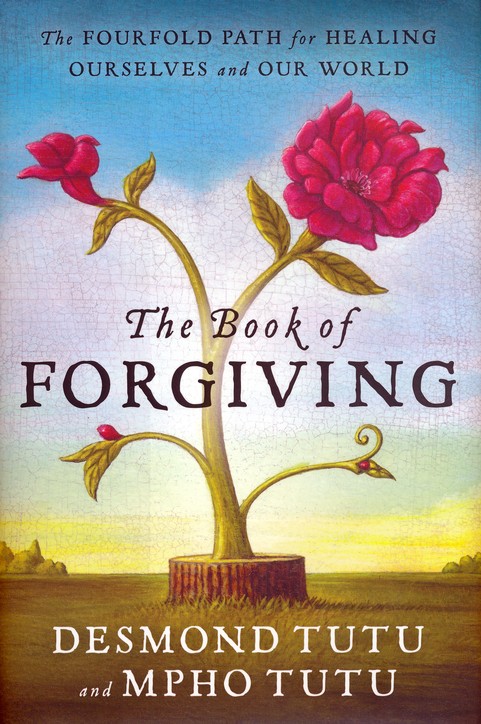
“A very important but difficult piece of renewing relationships is accepting our part in any conflict. If we have a relationship in need of repair, we must remember that the wrong is not usually all on one side, and we are more easily able to restore relations when we look at our contribution to a conflict.” ~ Desmond Tutu, “The Book of Forgiving: The Fourfold Path for Healing Ourselves and Our World”

Principle #2: Ask, “Am I thinking through this in a healthy way?”

  • What happened?
  • What’s the story I’m telling myself about what happened?

Principle #3: Ask, “Am I willing to listen and receive from the other persons involved?”

James 1:19-20 (NIV) My dear brothers and sisters, take note of this: Everyone should be quick to listen, slow to speak and slow to become angry, because human anger does not produce the righteousness that God desires.

  • Do I fully understand their perspective? (For example, have I repeated what they’ve said in my own words to be sure I understand their point of view?)
  • Are there any questions I can ask to receive more clarity?
  • I’d like to take some time to think about what you’ve said. Can we circle back to this conversation next week?

Principle #4: Ask, “Am I ready to speak about this in a healthy way?”

Ephesians 4:29 (NIV) Do not let any unwholesome talk come out of your mouths, but only what is helpful for building others up according to their needs, that it may benefit those who listen.

Philippians 2:3-4 (NIV) Do nothing out of selfish ambition or vain conceit. Rather, in humility value others above yourselves, not looking to your own interests but each of you to the interests of the others.

  • Do I need to share a differing perspective? For example, does the topic being discussed overlap with any of my deepest values?
  • What is my true motivation for responding?
  • Remember: The motivation for what I’m sharing is more important than the information I’m sharing.

We Live to Glorify God with our Bodies: Day 5

Week 1 Banner

     Day 5: Reflection

READING: 1 CORINTHIANS 10:23-24

What did the Scripture readings this week reveal to you about the grace and love of God?         

What did you learn about yourself this week? 

F260 READING: (A Scripture Reading Plan for Busy Believers)

Read: Jeremiah 25 & 29

Reflect: What did you H.E.A.R. from God today?

PRAYER:

Write out your own prayer to God today.

Click here if you would like to provide feedback to help us make the daily devotional and scripture reading guide even better.

We Live to Glorify God with our Bodies: Day 4

Week 1 Banner

     Day 4: Glorify God With Your Body

Having successfully refuted the foolishness of the Corinthians, Paul concludes this section of his letter by saying, “Do you not know that your bodies are temples of the Holy Spirit, who is in you, whom you have received from God? You are not your own; you were bought at a price. Therefore honor God with your bodies.”

The first people who heard this letter being read in public would have quickly recognized three key points Paul makes here.

First, God lives within you! The Corinthians would’ve grown up in a culture in which many gods were worshiped and the myths and legends about them would’ve been well known. But Christianity didn’t just believe in one all powerful God. Christianity acknowledged that the Spirit of God lives within all who follow Jesus. 

Second, you were bought at a price! Paul was sure to note that the God who chose to live within His people did so at a huge cost to Himself: Jesus’ death on the cross.

Finally, honor God with your bodies! God is within you, and paid a huge cost to do so. As such, honor Him with your actions. As you read today, consider this: What are 3 steps you will take to honor God with your body over the next week? Month? Year?

READING: 1 CORINTHIANS 5:1-13, & 6:12-20

How would you explain what it means to honor God with your body to a friend? 

What are 3 steps you will take to honor God with your body over the next week? Month? Year?

F260 READING: (A Scripture Reading Plan for Busy Believers)

Read: Jeremiah 1:1-3:5

Reflect: What did you H.E.A.R. from God today?

PRAYER:

Heavenly Father, as this week is nearly at a close, I simply want to use this opportunity to thank You for the truths communicated in these Scripture passages. These passages are as challenging to be lived out now as they were to those who first read them. Nevertheless, they are full of irrefutable wisdom, and I am very grateful that I live in a country in which I can read, study, meditate on, and pray about the wisdom You have provided. May the joy I have about Your Word continue to become apparent to all I interact with on a regular basis. I thank You for all You are, all You’ve done, and all You’ll continue to do in and through me. I pray in Jesus’ name. Amen. 

Click here if you would like to provide feedback to help us make the daily devotional and scripture reading guide even better.

We Live to Glorify God with our Bodies: Day 3

Week 1 Banner

     Day 3: You Are One With the Lord

While we are able to learn a great deal about the Apostle Paul from his letters, there’s still a lot about his life we don’t know. For example, we don’t know if he was ever married, or even engaged to be married. However, we do know that he had a firm understanding of the oneness of a marriage relationship that is written about all throughout the Old Testament. 

As Paul continues to refute the Corinthians viewpoint of “Everything is permissible,” he gets rather specific. 

In 1 Corinthians 6:16 he writes, “Do you not know that he who unites himself with a prostitute is one with her in body? For it is said, ‘The two will become one flesh.’” The phrase “unites himself” indicates not only physical connection, but a permanent, lasting union. Paul uses this opportunity to refute the Corinthians belief that sex is only a temporary bond by saying that the oneness of that kind of relationship is permanent. Paul continues, “But whoever is united with the Lord is one with him in spirit.”

The intended meaning is impossible to miss. “You’re united with Christ! Permanently! This is significant! Let this be your focus in all things.” As you read today, consider this: Do you struggle to see yourself as permanently united with Christ? 

READING: 1 CORINTHIANS 5:1-13

Do you struggle to see yourself as permanently united with Christ? Why do you think that is? 

In 1 Corinthians 5:1-13, Paul outlines some of the most serious consequences for those who engage in sexual immorality. What thoughts do you have about this passage? 

F260 READING: (A Scripture Reading Plan for Busy Believers)

Read: 2 Kings 22 & 23

Reflect: What did you H.E.A.R. from God today?

PRAYER:

Heavenly Father, I confess that there are times when I don’t recognize the wonderful truth that I am united with You. I sometimes see You as, “The God in the sky,” instead of “The God who lives within me.” Today, may I remember that because of the trust and faith I have placed in Jesus, You live within me. You are with me. You desire the best for me. And You have already given me Your very best. May I rejoice in these truths not only today, but every day. I pray in Jesus’ name. Amen. 

Click here if you would like to provide feedback to help us make the daily devotional and scripture reading guide even better.

We Live to Glorify God with our Bodies: Day 2

Week 1 Banner

     Day 2: Not Everything is Beneficial

The Apostle Paul was very familiar with the culture and customs of the Roman Empire. Having grown up as a citizen of the empire, he could recognize the wisdom found in some of the more common teachings. However, he could also recognize foolish teachings. Knowing the people regularly stated, “Everything is permissible!” Paul responds with stronger, irrefutable wisdom.

In his first letter to the Corinthians, he acknowledges their philosophy: “Everything is permissible!” He responds by saying, “Well, perhaps, but not everything is beneficial.” He retorts again, “Everything is permissible!” “Well, perhaps, but I will not be mastered by anything.” 

In other words, Paul doesn’t refute the Corinthians knowledge of free will or their desire to choose, but he is sure to note that there may be negative consequences to their choices and actions.

Basically, the Corinthians had a culture of, “We can do whatever we want, eat whatever we want, and sleep with whomever we want, whenever we want. Everything is permissible!” But Paul refutes their way of thinking, and does so in a way that continues to ring true today. As you read today, consider this: What are the first thoughts that come to mind as you read 1 Corinthians 6:12-20?

READING: 1 CORINTHIANS 6:12-20

What are the first thoughts that come to mind as you read 1 Corinthians 6:12-20?

Be honest: What is at least one area in life in which you think something similar to, everything is permissible? In what ways are your thoughts and/or actions in this area not beneficial? 

F260 READING: (A Scripture Reading Plan for Busy Believers)

Read: 2 Kings 19, 20, & 21

Reflect: What did you H.E.A.R. from God today?

PRAYER:

Heavenly Father, I confess that there are some aspects of this Scripture reading that I don’t like. There are times when I think to myself that I should be able to say whatever I want, eat whatever I want, think whatever I want, or even fulfill sexual desires however and whenever I want. Admittedly, this is sometimes a challenging Scripture for me to accept and apply. But I know it comes from You and I acknowledge You are not only wiser than me, but that You also have my best interests at heart. Thank You for always desiring the very best for me. I pray in Jesus’ name. Amen. 

Click here if you would like to provide feedback to help us make the daily devotional and scripture reading guide even better.

We Live to Glorify God with our Bodies: Day 1

Week 1 Banner

     Day 1: Everything is Permissible

Have you ever had somebody tell you something you couldn’t or shouldn’t do? Of course you have. Whether it was a parent, a grandparent, a sibling, a teacher, or an employer, we’ve all had somebody tell us what we couldn’t or shouldn’t do. 

In some of these moments, we immediately recognize the wisdom of the person speaking with us. We know they have our best interests at heart, or at the very least, we recognize their desire to see us succeed. Assuming they have our best interests at heart, we know they truly care for our well-being.

But in other moments, we may think to ourselves, “Who do they think they are? I’m not doing anything ‘wrong’. Who are they to tell me what I should or shouldn’t do?”

Even though the ancient city of Corinth was a very different culture than our own, the people had a similar way of thinking. In fact, a common saying shared on the streets was, “Everything is permissible!” For example, if somebody were to say, “Hey, I’m not sure that’s a very good idea,” you could respond by saying, “Leave me alone! Everything is permissible!” 

As you read today, consider this: Have you ever thought something like, “Everything is permissible?” 

READING: 1 CORINTHIANS 6:12-20

How do you think most people would respond to this passage today?

Have you ever thought something like, “Everything is permissible?” What was the outcome? 

F260 READING: (A Scripture Reading Plan for Busy Believers)

Read: 2 Kings 17 & 18

Reflect: What did you H.E.A.R. from God today?

PRAYER:

Heavenly Father, I confess there have been many times in which I’ve had the thought, “I’m not doing anything wrong!” I’m continuing to recognize the fallacy of this way of thinking. Whether it’s regarding sexual thoughts, finances, marriage, parenting, or race, continue to help me see that this way of thinking does not lead to wisdom, but to ruin. 

As I begin a new week, may I regularly reflect on the truth that not everything is beneficial. I give You permission to help me see when my thoughts and actions are not beneficial for me or for others. Lead and guide me in everything. I pray in Jesus’ name. Amen. 

Click here if you would like to provide feedback to help us make the daily devotional and scripture reading guide even better.

How We Live Devotional & Scripture Reading Guide: Introduction

How We Live Graphic

This Reading Guide has been designed for use during “How We Live” Message Series                            South Ridge Church – February — March 2019

A Note from Pastor Justin:

The Bible is not just a book, but is 66 books written by dozens of different authors and copied from one generation to the next, and the next, and the next, so much so that it’s still the most-printed collection of writings in history. Despite such a rich history, it isn’t hard to find others who say or think, “The Bible is old. It’s outdated. It doesn’t have anything of real value.”

But research continues to show that the number one thing people do to grow, is read the Bible. Yes, eating healthy is helpful. Exercise, too. Even prayer and silence is soothing to the soul. But reading the Bible is the foundation upon which wisdom is built. Not because the Bible is God. But because it was given to us by God, to reveal to us who we are, how we live, and provide us a glimpse as to what’s next. 

Over the next six weeks, South Ridge Church will continue our study through Paul’s letter, 1 Corinthians. These messages will focus on some specific points the Apostle Paul mentioned about how the people of Corinth were to live. But it’s important to note that Paul didn’t just wake up one day and decide to write to the Corinthians. Instead, his letter was a response to a letter he first received from them. In 1 Corinthians 7:1, Paul writes, “Now for the matters you wrote about…” It’s pretty clear that his letter was written to encourage them, to guide them, and when necessary, to reprove them, because they were thinking or behaving in ways that were not setting a good example. 

As we begin this new message series, we encourage you to:

  • Commit to joining us every week of this series.
  • Commit to reading through this Reading Guide, reflecting well on the questions provided within each daily reading.
  • Use a good Study Bible and/or other resources as you read through this Reading Guide. Some recommendations include the NLT Study Bible, the NIV Zondervan Study Bible, the ESV Study Bible, among others. Click here for more information on many excellent Study Bibles available today.
  • Write down questions you have about what you’re reading, and take opportunities to seek out answers to those questions. 

We Are Servant Leaders: Day 5

06 Banner (jpg)

     Day 5: F260 Reading Only

F260 READING: (A Scripture Reading Plan for Busy Believers)

Read: Micah 1, 4:6-13, 5

Reflect: What did you H.E.A.R. from God today? HEAR Bible Study Method

PRAYER: On your own, take the opportunity to pray for the ministry of South Ridge Church. The following outline may be helpful.

Four Prayers for Your Church:

  1. Thank God for the miracle of SRC and our ministry.
  2. Thank God for any way in which SRC has changed your life.
  3. Commit SRC’s future to the Lord.
  4. Ask God for help in figuring out what your part in that future may be.

Note: If you would like to be an official member of South Ridge Church, please complete the “Membership Covenant” located here.


Click here if you would like to provide feedback to help us make the daily devotional and scripture reading guide even better.

We Are Servant Leaders: Day 4

06 Banner (jpg)

     Day 4: Financial Stewardship

OUR PLEDGE

  1. Each year the budget is prepared and approved by the entire Board of Trustees.  
  2. We will publish an annual financial statement which is made available to the church.  A more detailed statement is available to members upon request. 
  3. When donations are counted, it is our policy to always have a minimum of 2 unrelated people present with the money at all times.  
  4. We will do our best to help with genuine financial needs within the church.  The procedure to receive such help is to notify one of the pastors of your need or another’s need.  Where there is repeated financial need, financial accountability and counseling will be required.

GIVING TO GOD

What the Old Testament teaches about giving tithes and offerings to God:

What is tithing?

  • “Tithe” means one tenth

What is the difference between a tithe and an offering?

  • A tithe is giving 10% of my income.
  • An offering is anything I give above or below my tithe.

Six truths about tithing: 

  1. All of our money belongs to God.  He asks for a minimum of 10% back

“One tenth of the produce of the land, whether grain from the fields or fruit from the trees, belongs to the Lord and must be set apart to him as holy.” (Leviticus 27:30)

  1. God has connected refusing to tithe with stealing from him!

 “Should people cheat God? Yet you have cheated me!

“But you ask, ‘What do you mean? When did we ever cheat you?’

“You have cheated me of the tithes and offerings due to me. You are under a curse, for your whole nation has been cheating me.  Bring all the tithes into the storehouse so there will be enough food in my Temple. If you do,” says the Lord of Heaven’s Armies, “I will open the windows of heaven for you. I will pour out a blessing so great you won’t have enough room to take it in!” (Malachi 3:8-10)

  1. Tithing gives God a chance to prove he is God and wants to bless you!

“Your crops will be abundant, for I will guard them from insects and disease. Your grapes will not fall from the vine before they are ripe,” says the Lord of Heaven’s Armies.” (Malachi 3:11)

  1. New Testament giving is marked by sacrifice and generosity.

“Remember this—a farmer who plants only a few seeds will get a small crop. But the one who plants generously will get a generous crop.” (2 Corinthians 9:6)

  1. New Testament giving is marked by cheerfulness and willingness.

“You must each decide in your heart how much to give. And don’t give reluctantly or in response to pressure. “For God loves a person who gives cheerfully.”  (2 Corinthians 9:7)

  1. We have an obligation to give to those who provide for our spiritual development.

“Don’t you realize that those who work in the temple get their meals from the offerings brought to the temple? And those who serve at the altar get a share of the sacrificial offerings. In the same way, the Lord ordered that those who preach the Good News should be supported by those who benefit from it.” (1 Corinthians 9:13-14)

SRC’S AFFILIATES 

Great   Commission   Churches

South Ridge Church is affiliated with Great Commission Churches (GCC), a US based fellowship of churches and ministries united with churches throughout the world around shared values, a common history and especially the Great Commission of Jesus Christ.  GCC promotes conferences and mission opportunities and offers accountability and mediation services for member churches.  Great Commission Churches is a member of the National Association of Evangelicals and the Evangelical Council for Financial Accountability. For more information about Great Commission Churches log on to  www.gccweb.org.

Regionally, South Ridge Church partners with other GCC member churches in the state including Chestnut Ridge Church in Morgantown, WV and River Ridge Church in Charleston and Teays Valley, WV.

READING:

No additional reading today.

What thoughts came to mind as you read through the six truths about tithing? 

What are the benefits of tithing regularly?

F260 READING: (A Scripture Reading Plan for Busy Believers)

Read: Isaiah 65 & 66

Reflect: What did you H.E.A.R. from God today? HEAR Bible Study Method

PRAYER: On your own, take the opportunity to pray for the a friend or colleague. The following outline may be helpful.

Four Prayers for Your Friend:

  1. Thank God for the miracle of friendship.
  2. Thank God for any way in which your friend has changed your life.
  3. Commit your friend’s future to the Lord.
  4. Ask God for help in figuring out what your part in that future may be.


Click here if you would like to provide feedback to help us make the daily devotional and scripture reading guide even better.